
Neck pain quickly begins to dictate how you sleep, move, and perform on the job. While restricted mobility is a common struggle, a body that won’t turn or a sharp catch that stops you from focusing is far from routine.
Ignoring these signals often leads to compensatory injuries and long-term dysfunction as your body tries to work around the restriction. Don’t settle for just symptom relief.
Real recovery requires addressing the condition’s root cause rather than simply masking its symptoms, and this is where chiropractic techniques for both acute and chronic neck pain work to restore proper spinal alignment without medication or surgery.
Chiropractic care employs hands-on techniques to address the root causes of chronic and acute neck pain while supporting your body’s natural healing.
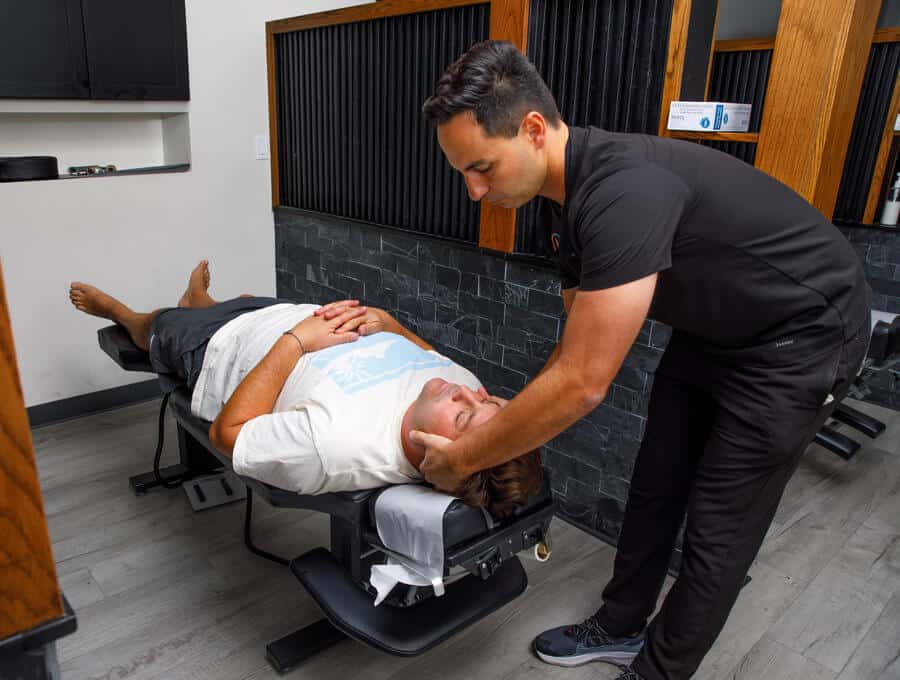
This is the gold standard for neck care. Gentle, targeted adjustments to specific vertebrae help realign neck joints, improve mobility, and reduce irritation that can cause pain and stiffness. By doing so, this technique quickly lifts the physical restrictions holding you back.
Research shows spinal manipulation can be effective for acute neck pain when performed by trained professionals. Compared to over-the-counter fixes, it addresses the structural hitch rather than just dulling the pain.
Pain rarely stays confined to the joints; it rapidly spreads to the surrounding muscles and ligaments. Chiropractors use myofascial release and targeted stretching to address tight tissues that often accompany spinal misalignment.
By improving local blood flow, this therapy clears out chronic tension cycles and helps repair the micro-tears that cause neck stiffness every afternoon.
For patients who prefer a more controlled or gentle approach, chiropractors utilize handheld tools to deliver precise pressure to the soft tissues around the cervical spine. This is an excellent bridge for breaking up stubborn scar tissue and restoring mobility without the need for manual force.
Research shows that IASTM can reduce neck pain and improve mobility—even after a single session—making it effective for those who are particularly sensitive or dealing with significant inflammation.
When your muscles feel like they have those painful knots, they’re often harboring trigger points that radiate pain into your shoulders or head. By applying sustained pressure to these specific points, we can force the muscle fibers to release.
This release is essential for restoring normal muscle function and stopping the referred pain that makes neck issues feel so widespread.
This method uses a special table with sections that drop a fraction of an inch during the adjustment. This allows chiropractors to use gravity to assist the alignment, significantly reducing the need for forceful twisting or turning of the neck. It’s a gentler option that delivers effective results.

Many patients begin noticing improvements within a few weeks, often between 4 and 12. However, this timeline can vary for everyone, depending on your symptoms and the underlying cause of your neck pain.
Acute neck pain responds to treatment results after a few sessions, whereas chronic neck pain usually takes longer to improve because it often involves deeper or long‑standing causes.
That’s why early evaluation matters. A chiropractor will assess your posture, mobility, spinal alignment, and other factors to identify the source of your pain and begin treatment right away, helping you recover more effectively.
How quickly you recover from acute and chronic neck pain through chiropractic techniques depends on several factors. Keep them in mind when setting realistic expectations for the biological reality of healing.
Every patient’s recovery is different, but most people follow a general timeline when receiving neck or cervical spine adjustments.
| First Visit | At your first visit, your chiropractor will analyze your spinal alignment, posture, and mobility to find out what’s causing your neck pain. If necessary, imaging is used to ensure precision.Your first chiropractic neck adjustments initiate the process of chronic pain relief, often resulting in an immediate reduction of localized pressure. |
| One to Two Weeks | This is the adaptation phase. You will notice a measurable decrease in pain and improved rotation. While acute symptoms often subside here, it’s normal to feel some temporary soreness as your musculoskeletal system recalibrates to its new, corrected alignment. |
| Four to Six Weeks | You have now entered the stabilization phase. The focus shifts toward restoring your full range of motion. Residual soreness from earlier sessions typically eases away, and daily physical tasks should begin to feel effortless again. |
| Eight to Twelve Weeks and Beyond | Your body has successfully adapted to regular care, and your spine-supporting muscles are now strong enough to hold your alignment. Most patients are symptom-free, though those seeking dealing with chronic pain may continue with periodic supportive care. |
Recovery through chiropractic techniques for acute and chronic neck pain takes time, but you shouldn’t feel like guessing about your progress. If you’re not reaching the expected milestones, it’s a signal to pause and refine your treatment plan.

Notify your chiropractor immediately if you observe any of these red flags:
Identifying these signs early helps your chiropractor adjust your protocols and keep your recovery safe and on track.
Effectively managing neck pain is a process that takes time, not a temporary fix. By understanding how these chiropractic techniques for acute and chronic neck pain work and what milestones to look for, you’re better equipped to play an active role in your recovery.
At Zaker Chiropractic, our priority is ensuring you never feel sidelined by your symptoms. Our team provides trusted, patient-centered chiropractic care in Torrance, CA, to resolve the structural causes of your pain and restore your quality of life.
Contact our office today to schedule a consultation.