When lower back pain refuses to fade after weeks of using heating pads, stretching, or ibuprofen, it can leave you frustrated and wondering whether relief is even possible. That’s often the moment people ask: Can a chiropractor actually help me get past this?
For many people, chiropractic care for lower back pain can offer a drug‑free way to ease pain, restore movement, and support recovery. Still, it’s not a one‑size‑fits‑all solution.
Before scheduling your first appointment, it’s worth knowing how chiropractic care may help with lower back pain, what treatment involves, and when a different type of care is more appropriate
Lower back pain can affect people of all ages and activity levels. The World Health Organization (WHO) estimates that 619 million people were living with low back pain in 2020, and cases are projected to rise to 843 million by 2050, making it the leading cause of disability globally.
Understanding the underlying cause is the first step toward choosing the right approach for relief.

Low back pain is extremely complex, and understanding whether your pain is acute, subacute, or chronic can help guide the appropriate treatment approach and set realistic expectations for recovery.
| Stage | Duration | What it usually means for treatment |
|---|---|---|
| Acute | Less than 6 weeks | Often mechanical, tends to respond fastest |
| Subacute | 6 to 12 weeks | Compensation patterns are forming; needs a defined plan |
| Chronic | 12 weeks (≈3 months) or longer | Stems from a mix of physical, structural, and lifestyle factors rather than a single acute injury |
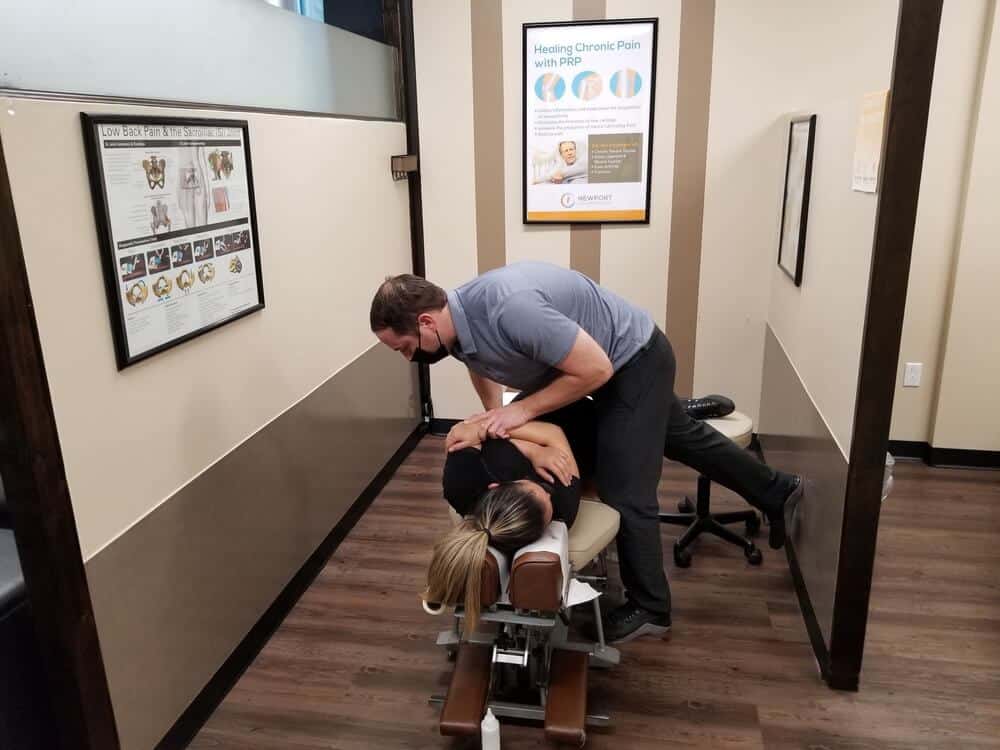
Chiropractic treatment for lower back pain takes a whole-body approach by addressing joint restrictions, muscle tension, and movement problems that may contribute to discomfort.
Based on your symptoms, a chiropractor may use different techniques to ease your pain and support better function.

Spinal adjustments and mobilization are manual therapy techniques commonly used by chiropractors to help with low back pain. Adjustments involve quick, controlled movements applied to a specific joint, while mobilization uses slower, gentler movements to gradually improve joint mobility without a thrust.
A systematic review and meta‑analysis in The Spine Journal shows both approaches can provide modest pain relief and improve mobility, particularly for acute and chronic low back pain.
Nonsurgical spinal decompression is used for disc-related lower back pain and sciatica. This technique uses a computer-controlled, motorized table to gently stretch the spine, allowing a bulging or herniated disc to retract, offloading compressed nerves and improving circulation to promote natural healing.
One early clinical study reported that patients experienced up to 80% improvement in pain and a 50% reduction in disability following decompression therapy. However, larger, high‑quality trials are still needed to confirm how consistently these results apply.
Trigger points are tight, sensitive areas within the muscles that can contribute to stiffness and back pain. Myofascial release is a hands-on technique that uses gentle, sustained pressure to relax tense areas and improve soft-tissue mobility.
A 2021 randomized controlled trial also suggests myofascial release may help reduce pain, especially when combined with conventional treatment, though results can vary.
While adjustments and other rehabilitative therapies can help relieve pain and restore mobility, corrective exercises and core strengthening focus on addressing the underlying movement and muscle imbalances that may contribute to lower back pain.
By strengthening weak muscles, improving posture, and retraining healthy movement patterns, these exercises can help you reduce the risk of recurring pain.
Lower back pain may feel similar from one person to another, but the underlying cause can be very different. That’s why your chiropractor starts with a thorough diagnostic evaluation before recommending any treatment.
The initial findings help identify what may be contributing to your pain, determine which techniques are appropriate, and guide a personalized lower back pain chiropractic treatment plan based on your specific needs. Here’s what a systematic approach looks like.
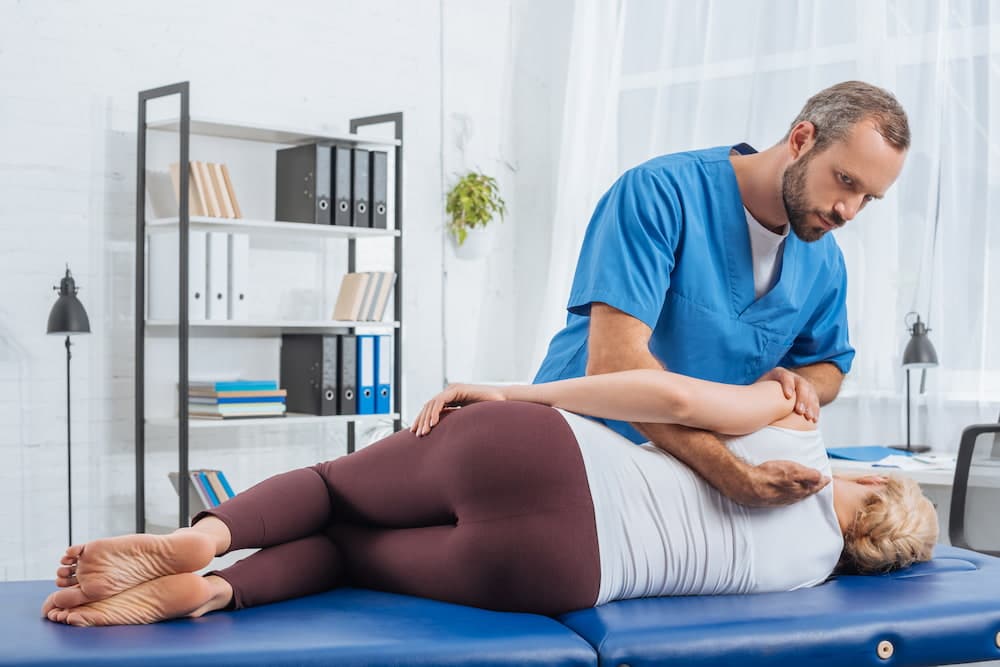
Your chiropractor will first discuss your symptoms, including when they started and what tends to trigger them. They will also review your medical history, including any previous injuries, surgeries, and treatments you’ve tried.
Next, a physical and neurological examination assesses your spinal movement, reflexes, muscle strength, and sensation to identify factors that could be contributing to your discomfort.
Depending on your symptoms and initial findings, your chiropractor may recommend imaging or nerve testing to help confirm or rule out specific conditions. X‑rays are typically used to check alignment, degenerative changes, or fractures, while advanced imaging such as MRI or CT is more appropriate when disc or nerve involvement is suspected.
Chiropractic clinics with in-house diagnostic testing provide more detailed answers the same day.
| Test | What it rules in or out |
|---|---|
| X-ray imaging | Alignment, degenerative change, fracture, spondylolisthesis (vertebra slippage) |
| Electromyography (EMG) | Whether muscle function is affected by nerve involvement |
| Nerve conduction velocity (NCV) | Whether a nerve is compressed, and which nerve root |
| Neuromuscular ultrasound | Soft tissue damage, inflammation, nerve entrapment, or swelling |
Quality chiropractic care starts with knowing when an adjustment is appropriate and when another form of care is safer. Recognizing these boundaries helps ensure you receive the right care at the right time.
While many patients consider seeing a chiropractor for lower back pain, spinal manipulation is strictly contraindicated under the following conditions:
Go to an emergency department if you have:

If your evaluation reveals no red flags and you prefer to avoid traditional, high-velocity spinal adjustments, there are gentler options available. Techniques such as drop‑table adjustments, instrument‑assisted adjustments (e.g., Activator method), and flexion‑distraction therapy use different approaches to help reduce discomfort, improve mobility, and support healthy spinal function.
Nonsurgical spinal decompression is sometimes offered as a low‑force option, and early studies along with patient reports suggest it can help ease pain and improve function, though outcomes vary from person to person.
These techniques are generally well tolerated, and serious adverse events are rare. Most patients may experience mild, temporary soreness or fatigue afterward, which typically resolves within 24–48 hours.
How quickly you respond to chiropractic care for lower back pain depends on whether your condition is acute or chronic. Clinical guidelines note that acute low back pain is often reassessed after 4–6 visits, with many patients improving within 6–12 sessions over 2–4 weeks. Chronic pain usually takes longer to resolve, especially when it has persisted for years.
Your chiropractor will explain what to expect during your initial evaluation and monitor your progress throughout care. If there is no measurable improvement within the expected timeframe (typically the first month), your treatment plan may be adjusted, or you may be referred for an alternative approach to ensure you receive appropriate care.
Lower back pain can have many possible causes, so effective care starts with an accurate assessment. A thorough examination and diagnostic testing help identify what is contributing to your pain and guide the development of a treatment plan tailored to your needs.
If you are looking for a chiropractor in Torrance for lower back pain, South Bay Pain & Wellness is ready to help. Our comprehensive approach combines personalized care with in-house diagnostic testing, ensuring you receive the right treatment you need to reclaim an active, pain-free life.
To make your care accessible, we accept most insurance plans, including Aetna, UnitedHealthcare, Anthem Blue Cross, Blue Cross Blue Shield, and Cigna. Schedule a consultation for chiropractic care for lower back pain today!