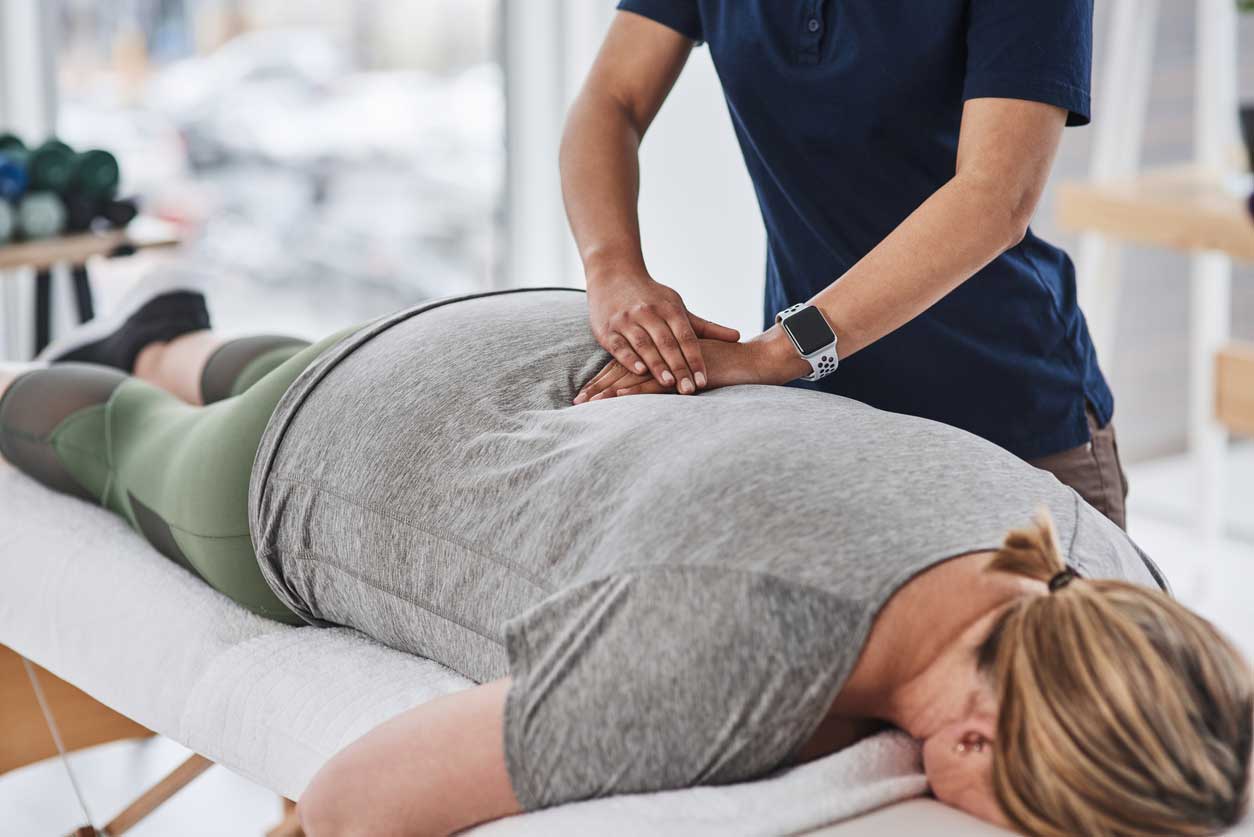
Pain or stiffness that travels from your lower back down your leg can feel overwhelming. In many cases, these symptoms trace back to a herniated disc in the spine. Surgery is rarely the first step, and it’s not the only option.
Nonsurgical herniated disc treatment can help you move with less pain through chiropractic care, decompression therapy, targeted interventions, and guided exercises. These evidence-based treatments work to ease discomfort and improve function, and this blog shows how.
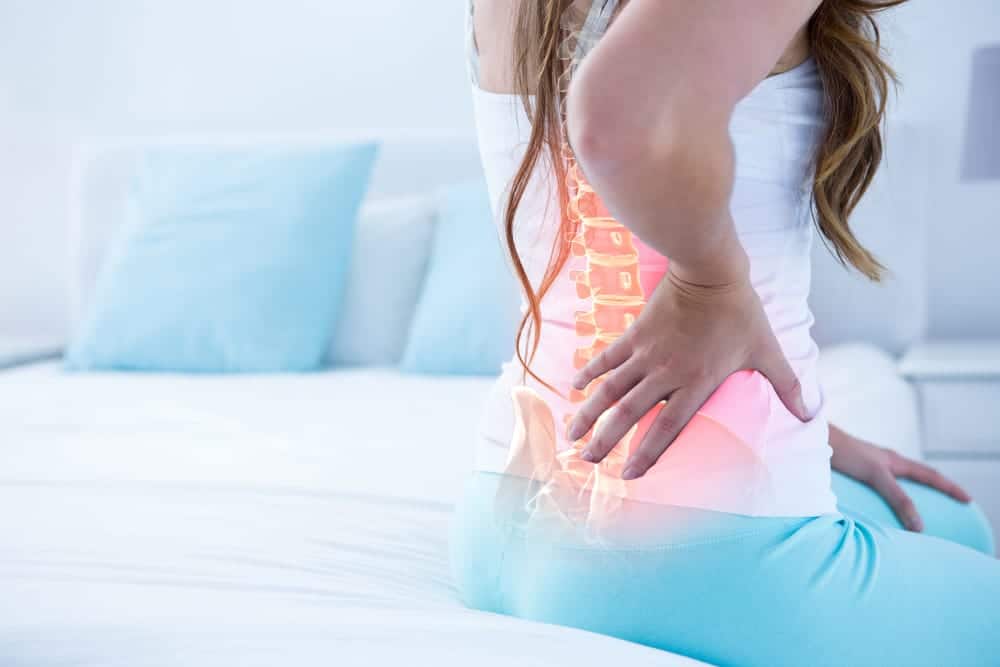
Spinal discs act as cushions between the vertebrae. When the soft inner core pushes through the tougher outer layer, it’s called a herniated disc, and it can press on nearby nerves. If that nerve is the sciatic nerve, the result is sciatica.
Sciatica affects about 10–40% of people at least once in their lives, most often due to herniated discs. Symptoms include pain, tingling, or numbness from the lower back down the leg.
Fortunately, most cases improve without the need for surgery. Structured, nonsurgical treatment plans that ease inflammation and nerve pressure are usually sufficient for recovery.
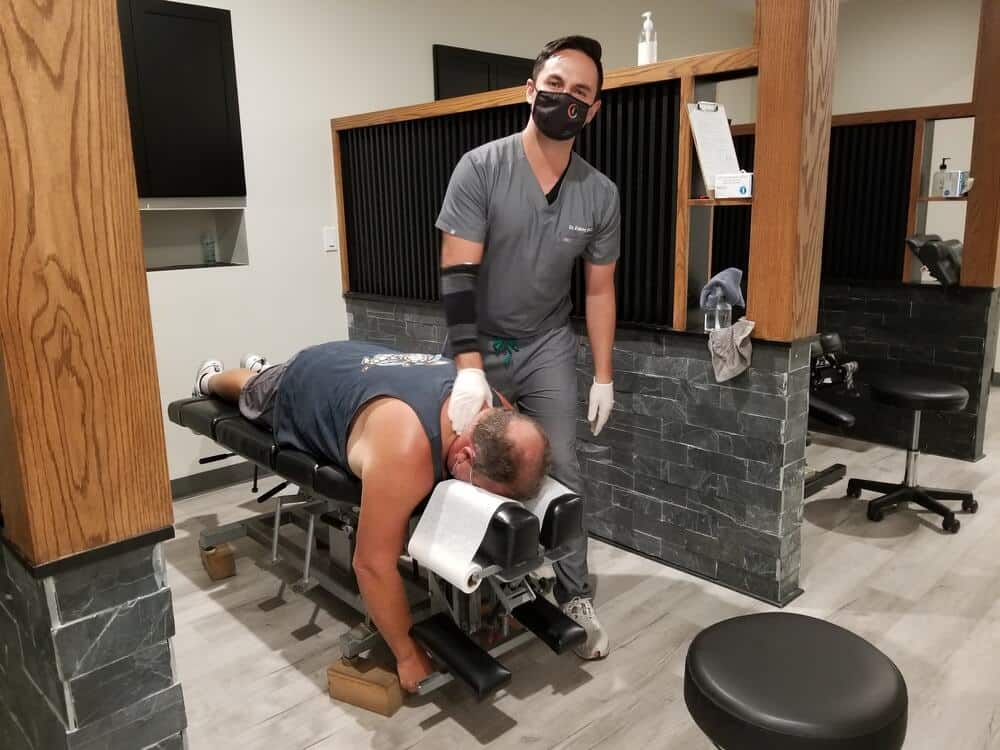
Chiropractic care is all about restoring your proper spinal alignment. Gentle, controlled adjustments help improve joint function and reduce irritation on the affected nerves. For people with sciatica, this treatment offers several interconnected benefits:
Spinal adjustments are usually combined with other therapies. Techniques such as therapeutic massage or spinal decompression complement chiropractic care well, reducing muscle tension and further relieving disc pressure.
Nonsurgical spinal decompression therapy uses a gentle traction force to create space between your vertebrae. This therapy reduces pressure on irritated nerves and the injured disc itself, supporting recovery naturally. Benefits include:
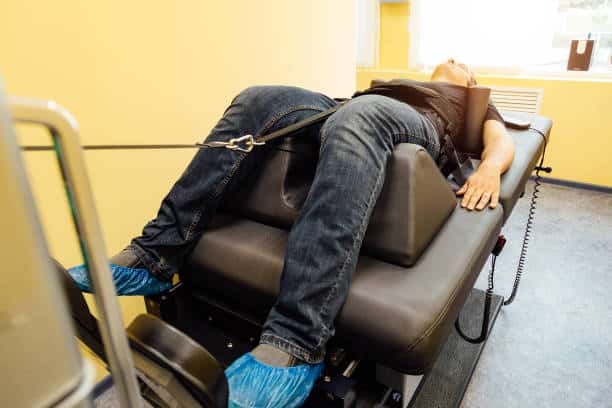
This nonsurgical therapy is most effective when combined with other complementary approaches. A holistic, conservative treatment for herniated discs often integrates chiropractic adjustments to improve spinal alignment, guided exercise programs, and build lasting core support.
When a disc is injured, the surrounding muscles tighten in a protective spasm. While this response is meant to shield the spine, it can worsen nerve pressure and pain.
Targeted massage therapy, including as myofascial release, relaxes tense muscles and supports healing. This hands-on approach delivers the following benefits:
By alleviating muscle guarding and discomfort, massage therapy prepares your body for active rehabilitation. It makes it easier to participate more effectively in strengthening and mobility exercises essential for your recovery.
For some patients, chronic pain and severe muscle guarding make traditional manual therapy difficult to tolerate. MUA is an advanced procedural technique performed under light, controlled sedation. This process is designed to achieve specific therapeutic goals:
Remember, MUA is not a standalone cure. Its primary role is to interrupt cycles of severe pain and immobility. The procedure is consistently followed by active care, including chiropractic adjustments, decompression therapy, or personal training to build on these gains and encourage lasting results.
Personal training programs focus on building the precise, foundational strength your spine needs. These programs emphasize core stabilization, posture correction, and safe, daily movement patterns.
Personal training offers various benefits for your spinal health:
Personal training reinforces progress made through other therapies. Just as importantly, it equips you with sustainable habits for proper lifting, smart ergonomics, and confident mobility. These skills become your strongest defense against sciatica and other disc-related issues.
Even small, consistent changes to your daily habits can reduce strain on your spine and create a healthier environment for healing. These proactive steps strengthen your nonsurgical herniated disc treatment plan:

These lifestyle adjustments work well with your clinical care. Most importantly, staying consistent with prescribed home exercises is essential for optimal outcomes. Through these habits, you actively build a strong foundation for lasting sciatica relief and spinal health.
You have more options for herniated disc treatment than you might realize. A structured, nonsurgical herniated disc treatment plan brings together therapies like spinal decompression and guided rehabilitation, working not just to provide pain relief but to restore the way your body moves.
This approach actively reduces nerve pressure and restores healthy movement patterns, helping you move freely and confidently in your daily life.
Strengthen your spine with structured care from Zaker Chiropractic. Our team focuses on delivering effective, noninvasive relief for herniated discs, helping you regain confidence in your spine health. Book your consultation today and find the plan built for your needs.